 Skip to content



Circuit Breaker Keeps Tripping: How to Fix and Prevent Electrical Trips
Estimated reading time: 12 minutes
Key Takeaways
- Circuit breakers trip to protect electrical circuits from overload, short circuits, ground faults, and wiring or appliance faults.
- Repeated trips indicate serious issues requiring diagnosis to prevent hazards like fires or shocks.
- Safe diagnosis involves unplugging devices, resetting breakers, and careful inspection without handling live wires.
- Resetting breakers safely and managing electrical load reduce frequent trips.
- Persistent problems or breakers that won’t stay on signal dangerous faults needing professional electrician intervention.
Table of contents
A circuit breaker keeps tripping when it continually switches off power due to detected faults. This crucial safety measure prevents electrical damage, shocks, and fires. Understanding the reasons behind these trips, diagnosing the root cause, and knowing how to fix or prevent them is essential for every homeowner or business. For more tips, visit simple solutions for circuit breaker tripping.
A circuit breaker is an automatic switch designed to protect circuits from overloads, shorts, or ground faults by cutting off electricity flow.
Circuit breakers are vital to prevent shocks, overheating wires, and fires. If your circuit breaker keeps tripping, it’s a warning sign not to overlook.
This guide covers how to perform a tripped circuit breaker fix, and what to do if a breaker won’t stay on.
Sources:
parkerandsons.com
exquisiteelectric.com
Understanding Why a Circuit Breaker Keeps Tripping
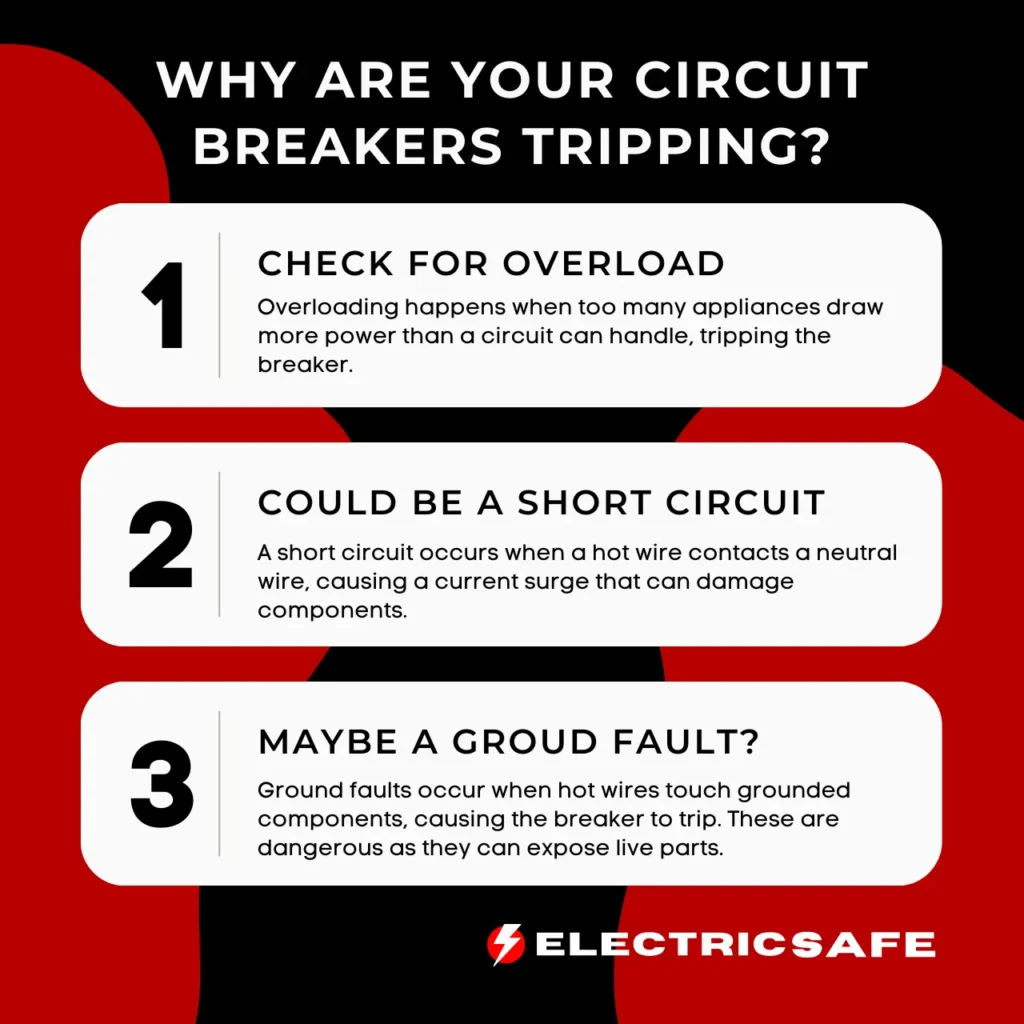
Repeated trips usually result from one of four main electrical issues:
1. Overload
An overload occurs when too many devices run on the same circuit at once, exceeding its amp limit (often 20 amps). This causes the breaker to trip to prevent wiring damage. For managing loads, see mrelectric.com.
- Common with multiple high-wattage appliances like hair dryers or air conditioners.
- Signs include flickering lights or buzzing outlets when devices run together.
- Often affects kitchens and laundry circuits with many appliances.
2. Short Circuit
A short circuit happens if a live wire touches a neutral wire, causing a sudden current surge.
- Breaker trips instantly to protect wiring and prevent fire.
- Signs: loud popping noises, burning smells, or trips when no appliances run.
- Caused by faulty wiring, damaged cords, or defective devices.
3. Ground Fault
A ground fault occurs when a live wire touches a grounded metal part or wire.
- The breaker trips quickly to prevent electric shocks.
- Common in wet locations – bathrooms, outdoors. Installing GFCI outlets helps, detailed at purefoyelectric.com.
4. Faulty Appliances or Wiring
Damaged cords, worn plugs, or loose wiring can cause excessive current draw, leading to trips.
- Trips localized to a specific outlet or device suggest this.
- Inspect suspect appliances as advised at mrappliance.com.
Identifying the Cause
- If trips only when one device runs, suspect that appliance.
- Instant trips with no load often signal short or ground faults.
- Overloads occur when many devices run simultaneously.
- Regular trips from one outlet suggest wiring or appliance faults.
Sources:
gacservices.com
mrelectric.com
How to Diagnose the Problem Safely
Diagnosing a circuit breaker that keeps tripping must be done with utmost caution to avoid electric shock or injury.
Safety Precautions:
- Wear insulated gloves and use insulated tools.
- Never work on live electrical wires.
- If unsure, turn off the main breaker before inspecting.
- If uncomfortable, seek a professional electrician. Safety guidelines at exquisiteelectric.com.
Step-by-Step Troubleshooting:
- Unplug all devices and turn off lights to eliminate overloads.
Source: purefoyelectric.com - Locate the tripped breaker inside the panel. It usually rests midway, not fully ON or OFF.
- Reset the breaker by switching it fully OFF then ON until it clicks.
– If it stays ON, plug devices in one at a time to find the cause.
Sources: mrelectric.com, YouTube - Visually inspect wiring and breaker area (without touching) for burning marks or loose wires.
Source: gacservices.com
Remember, temporary fixes like unplugging appliances may stop overload trips, but persistent trips or smells/heat require professional electrician service.
Sources:
exquisiteelectric.com
mrelectric.com
How to Fix a Tripped Circuit Breaker (Tripped Circuit Breaker Fix)
Resetting a breaker is often straightforward but must be done safely to prevent injury or damage.
Safe Reset Procedure:
- Confirm power to the affected circuit is off.
- Push the breaker fully to OFF; some units require firm pressure.
- Then switch it back ON until you hear a click locking it in place.
Load Redistribution:
- Move high-wattage devices (heaters, hair dryers, A/C) to different circuits.
- Helps prevent overload-related trips. More info at mrelectric.com.
Inspect and Test Appliances:
- Check cords/plugs for wear or damage.
- Unplug and reset breaker, then plug devices in one by one to isolate faults.
- Faulty appliances to repair or replace – see mrappliance.com.
Warning Against Repeated Resets:
Do not repeatedly reset breakers that trip immediately after. This indicates dangerous faults posing fire or damage risks.
Sources:
purefoyelectric.com
mrappliance.com
mrelectric.com
What to Do When the Breaker Won’t Stay On
If a breaker won’t stay on after resetting, it’s a critical issue needing immediate attention.
Potential Causes:
- Persistent circuit overload.
- Short circuits or ground faults.
- Damaged or deteriorated wiring insulation.
- Worn or defective breaker — more common in units over 20 years old.
Severe Warning Signs:
- Burning smells, smoke near panel.
- Sparks or arcing sounds in breaker box.
- Trips even with light electrical load.
- Breaker or panel warm or hot to touch.
Recommended Actions:
- Unplug all devices on the circuit.
- Leave the breaker switched OFF.
- Watch for heat or damage signs on the panel.
- Do not use the circuit until a licensed electrician inspects and fixes it. More info at exquisiteelectric.com.
Sources:
exquisiteelectric.com
mrelectric.com
When to Call a Professional Electrician
Some breaker problems are dangerous or complicated and require expert diagnosis and repair.
Clear Signs to Call for Help:
- Breaker keeps tripping despite unplugging and load balancing.
- Visible scorch marks, melted outlets, or burning odors.
- Panels or breakers older than 20 years.
- Sparks, smells, heat, or trips under minimal loads.
- Suspected faulty or damaged wiring.
Risks of Ignoring the Issue:
- Fire hazards risking property and life.
- Electric shocks to occupants.
- Expensive damage to systems and appliances.
- Potential for total electrical failure.
Professional Solutions:
- Use of multimeters and special tools to detect faults.
- Wiring repairs, breaker replacements, or panel upgrades.
- Installing protective devices like GFCI breakers (purefoyelectric.com).
- Comprehensive electrical system improvements for safety.
For professional help, visit parkerandsons.com and mrelectric.com.
Preventative Tips to Avoid Future Circuit Breaker Trips
Taking steps to manage electrical loads and maintain your system prevents inconvenient or dangerous breaker trips.
Load Management
- Map your home’s circuits to know which appliances share circuits.
- Avoid running multiple high-wattage devices on the same circuit simultaneously.
- Spread electrical loads evenly to prevent overloads.
Regular Maintenance
- Schedule yearly electrical panel inspections.
- Replace old or faulty breakers and appliances promptly.
- Keep wiring in good condition—replace frayed or damaged cables.
Safe Appliance Practices
- Use surge protectors to guard against electrical spikes.
- Avoid daisy-chaining extension cords, which risk overload.
- Install GFCI outlets in wet or outdoor areas to prevent ground faults (purefoyelectric.com).
Additional advice available at mrelectric.com.
Conclusion
A circuit breaker keeps tripping due to overloads, short circuits, ground faults, or wiring and appliance issues.
Diagnose the cause by safely clearing loads and performing a standard tripped circuit breaker fix. If the breaker won’t stay on or trips immediately, urgent professional attention is necessary. Learn more about persistent issues at mrelectric.com.
Always address breaker trips promptly to protect your home, family, and equipment. Avoid risking safety by ignoring persistent problems — expert help is vital.
For continuing issues or advice, contact a licensed electrician or refer to trusted sources linked throughout this post.
Sources:
parkerandsons.com
gacservices.com
exquisiteelectric.com
purefoyelectric.com
mrelectric.com
mrappliance.com
YouTube
Frequently Asked Questions
- Why does my circuit breaker keep tripping?
- Can I reset my breaker myself?
- What should I do if the breaker won’t stay on?
- When should I call an electrician?
Why does my circuit breaker keep tripping?
It commonly trips due to circuit overload, short circuits, ground faults, or faulty wiring/appliances causing excessive current draw. Identifying the exact cause is key to fixing the problem safely.
Can I reset my breaker myself?
Yes, if you follow safe procedures: remove all loads, locate the tripped breaker, turn it fully OFF, then ON again. If it trips immediately or you’re unsure, seek professional help.
What should I do if the breaker won’t stay on?
This is a serious issue signaling dangerous faults. Do not use that circuit. Unplug all devices and call a licensed electrician immediately to inspect and repair.
When should I call an electrician?
If breaker trips persist despite unplugging devices or load changes, if you notice burning smells, sparks, heat, or if your electrical system is old or visibly damaged, contact a licensed professional for safety and repair.


